
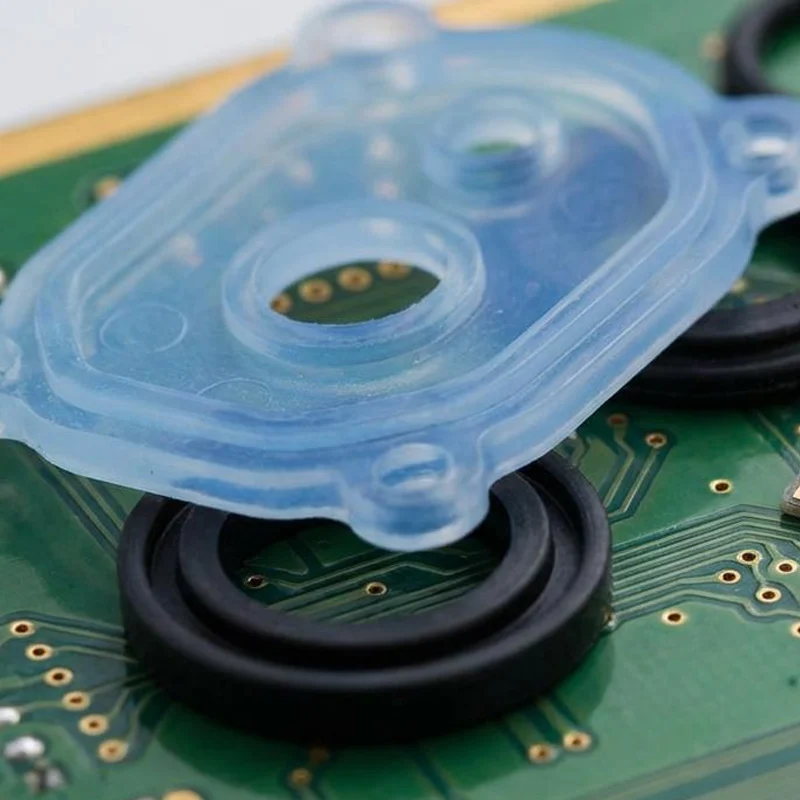
1. Why Electronics Buyers Are Looking Past the Circuit Board
The Enclosure Is Where Reliability Is Decided
A board can pass every electrical test and still fail in the field if heat, water or vibration reaches it. The seal, the gasket, the grommet and the cushioning part are small line items, but they set the protection level of the whole product.
Three Stresses, One Material Decision
Heat, moisture and vibration rarely act alone. An outdoor sensor sees thermal cycling and rain. A battery enclosure sees heat and vibration together. Buyers who treat each stress separately often end up with parts that solve one problem and weaken another.
What Changes for Sourcing
Material, process route and tool design are linked. A gasket that works in one process may not translate to another, so the sourcing decision starts earlier than most RFQs assume.
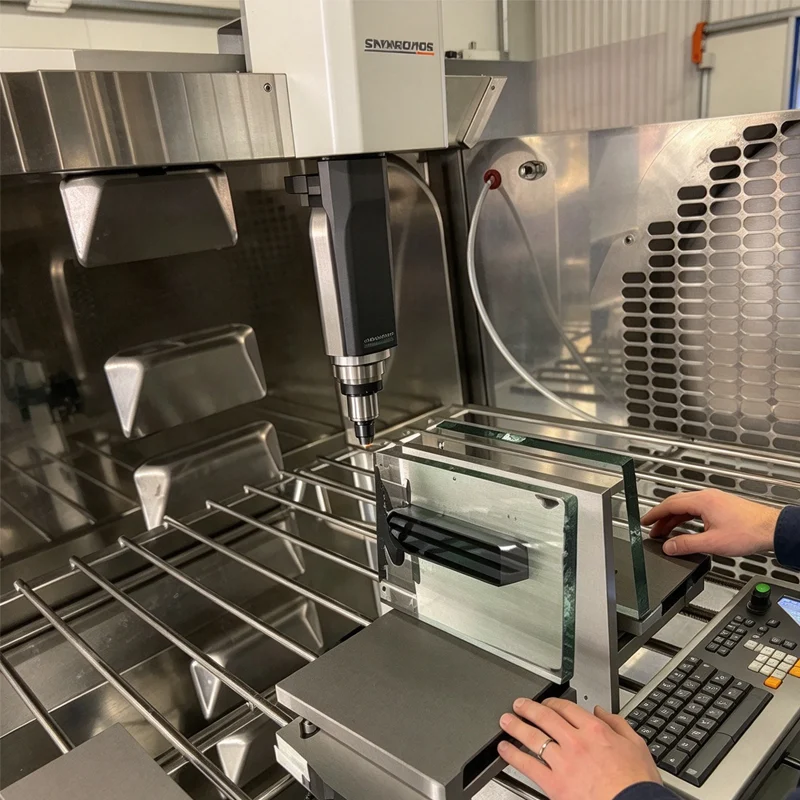
2. Market Observation: What Current Sources Say About Silicone in Electronics
Heat: Thermal Range and Stability
Anlintech’s comparison gives LSR a range of −60 to +230°C, against −45 to +150°C for EPDM and −26 to +205°C for FKM. Stockwell Elastomerics recommends silicone for battery enclosures for both sealing and vibration damping, citing low compression set, excellent thermal stability and availability with UL 94V‑0 flame resistance.
Moisture: What an IP Rating Actually Asks
Stockwell’s enclosure gasket page summarizes IP67 as complete protection against dust and protection against temporary submersion up to 1 meter. The same company notes that closed-cell silicone foams are converted into gaskets for IP65 to IP68 enclosures, while solid silicone gaskets are sometimes used in high-pressure washdown environments.
Vibration: Damping and Recovery
The Stockwell robotics guide describes joints and actuators that need seals able to flex and recover repeatedly while keeping out dust and moisture. That is a vibration and motion requirement, not only a sealing one.
Compression Set: The Spec Buyers Often Skip
Compression set describes how much a seal fails to rebound after long compression. A gasket that takes a set loses contact force, and the leak path opens over time. Both Stockwell sources list low compression set as a reason silicone is chosen for enclosures.
Overmolding Removes the Gap
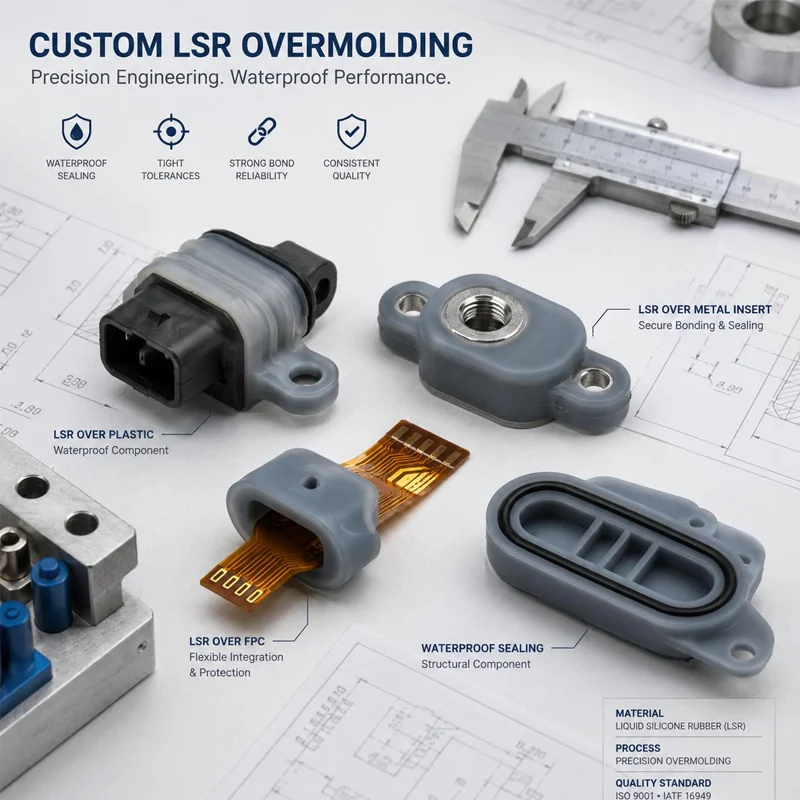
Anlintech describes LSR overmolding as the premium approach for waterproof electronics, because the silicone bonds directly to the housing during molding and eliminates any gap between seal and housing. That claim comes from a supplier that sells the process, so buyers should still validate it on their own geometry.
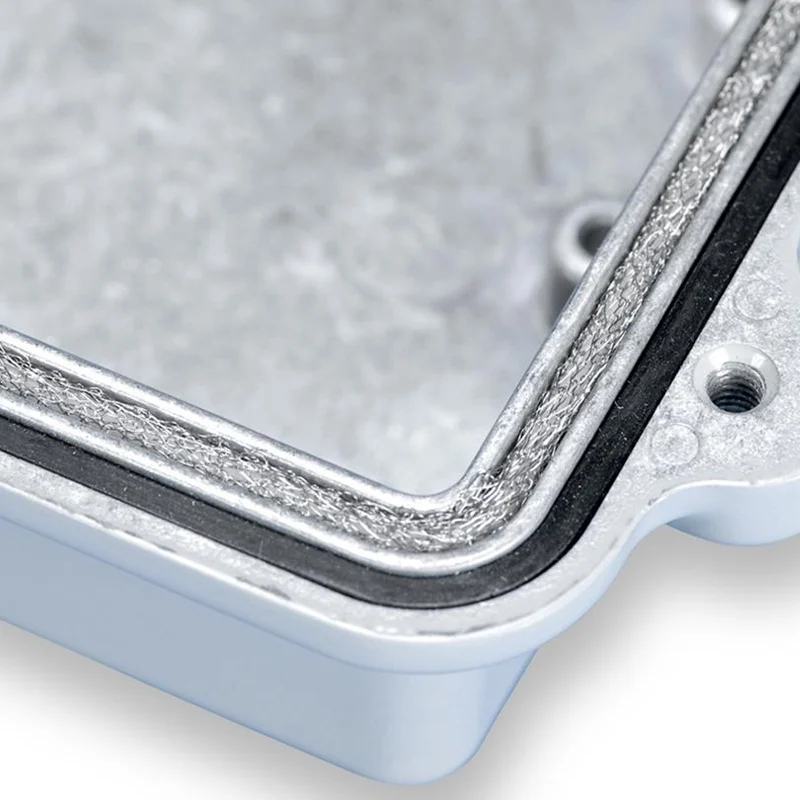
3. Choosing the Process Route for Silicone Components
Compression-Molded Silicone Gaskets
Silicone compression molding is a straightforward process that can integrate silicone with plastic, metal and fabric in a single component. It suits flat or simple-profile gaskets where tooling cost matters.
LSR Injection-Molded Seals
LSR enjeksiyon kalıplama suits complex, high-precision parts in volume, such as seals, membranes and electrical connector components. Flash control becomes critical on sealing surfaces, so parting line and venting decisions belong in the design review.
LSR Overmolding for Integrated Seals
LSR overmolding combines silicone with plastic, metal or other substrates in one part. For enclosures, it can replace a loose gasket plus assembly step with a seal bonded to the housing.
Transfer Molding and Rigid Housings
Silicone transfer molding is an option for specific insert and geometry cases. Where the housing itself is plastic, plastic injection molding from the same supplier simplifies tolerance matching between housing and seal.
4. Milosilicone Perspective: Where LSR Molding Fits Electronics Programs
What Our Documented Process Covers
Milosilicone runs six LSR molding machines and automated production in an ISO Class 8 clean room. Tooling, DFM analysis, 3D prototyping and sample approval sit in the same workflow, and our systems are certified to ISO 9001:2015, ISO 14001:2015 and IATF 16949. Details on the supplier are on our Hakkımızda page.
Recommended Starting Point for Enclosure Seals
For buyers sourcing molded seals or overmolded enclosure parts, we suggest starting with our LSR injection molding service, and moving to LSR overmolding where an integrated seal replaces a separate gasket. Advantages for a buyer:
- Tooling and DFM under one roof: parting line, gating and venting are reviewed before steel is cut, which matters for sealing surfaces.
- Multiple process routes: LSR, compression, transfer, overmolding and plastic injection, so the route follows the part and not the supplier’s equipment list.
- Clean-room automation: an ISO Class 8 environment already used for medical and baby-care parts; see our silicone medical parts.
- Defined finishing: flash removal, post-curing and inspection are listed steps; see secondary processes.
- Prototype-to-production path: 3D prototypes and sample approval before mass production.
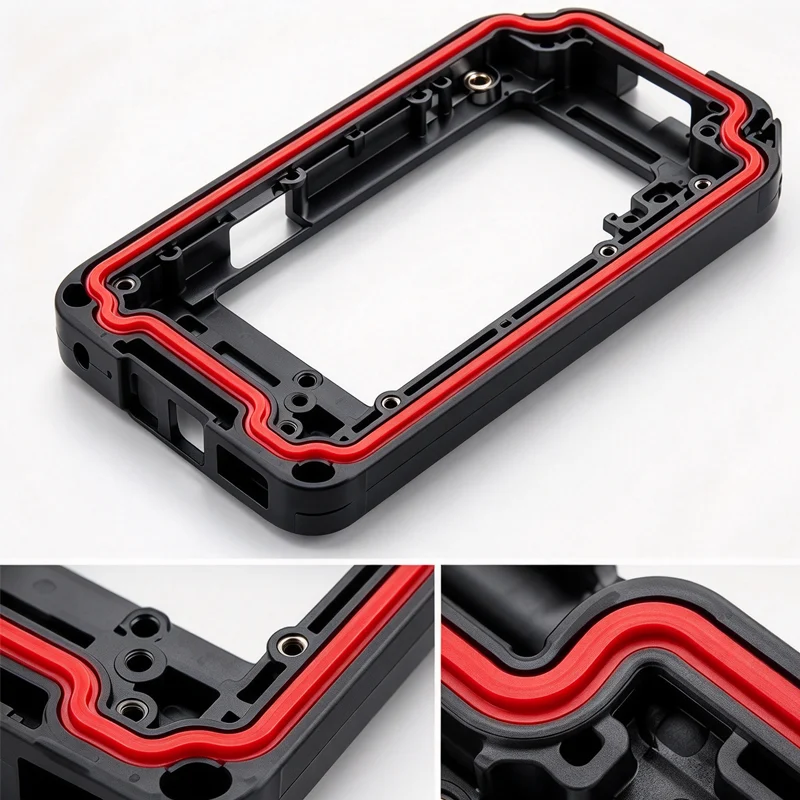
Customer Observation
Verified observation from Milosilicone sales and production teams:
During recent OEM silicone component discussions, customers have shown increasing interest in reviewing part design and manufacturing feasibility before finalizing tooling. Instead of providing only drawings and material specifications, many buyers now ask about sealing structures, mold design, flash control, compression requirements and production consistency at an earlier project stage.
Our engineering team has observed that silicone sealing components for demanding applications often require closer cooperation between product design, tooling and molding teams. Issues such as parting line location, venting design and assembly tolerance can directly influence sealing performance and production yield.
This shift indicates that electronics and industrial product buyers are placing greater value on engineering support and manufacturing process capability when selecting a silicone molding partner.
5. Practical Decision Framework: What to Settle Before Tool Approval
Define the Environment First
- What is the continuous and peak temperature at the seal?
- Which IP rating is required, and is it tested on the finished enclosure or assumed from the material?
- Is vibration continuous, shock-based or both?
Specify the Seal, Not Just the Material
- What compression set limit applies, and at what temperature and duration?
- Is a flame rating required? Ask at RFQ stage whether the material grade is available.
- What hardness range supports the closure force of the housing?
Check the Process Route
- Would an overmolded seal remove an assembly step?
- Where does the parting line fall relative to the sealing surface?
- Does the supplier mold the plastic housing too, so tolerances can be aligned?
Plan Validation
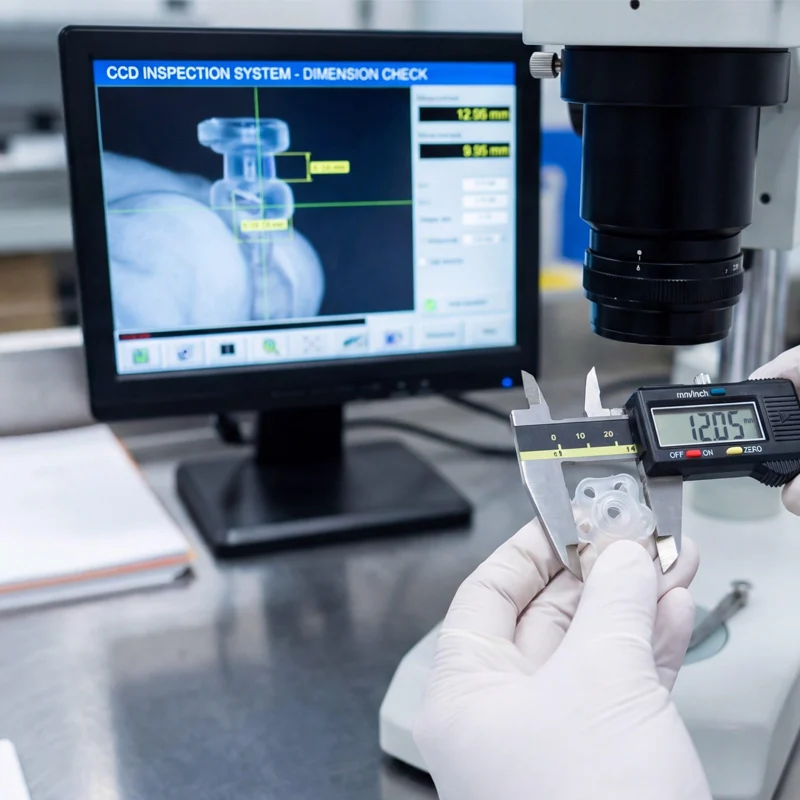
Ask for first-article inspection results and which tests are run on samples. A drawing and a sample approval step, not a datasheet, is what protects the program.
6. What This Means for Your Brand
From Component Cost to Field Reliability
A low-cost seal that fails after thermal cycling creates warranty cost far above the part price. Comparing quotes on unit price alone hides this trade-off.
Supplier Evaluation Moves Earlier
Process route, tooling discipline and validation support are set before the first shot. For brands building electronics products, assessing these at RFQ stage reduces redesign risk. The next link in the chain is supplier qualification and quality documentation.
Conclusion
Silicone protects electronics because it holds its seal across wide temperature ranges, rebounds after compression and absorbs motion. The outcome still depends on process route, tool design and validation. Buyers who define environment, compression set and IP requirements before RFQ get better quotes and fewer surprises.
FAQ
1. What file formats can I send for a silicone seal quote?
Milosilicone accepts ProE (prt), IGES (igs), STEP (stp) and Parasolid (x_t) files, and samples can also be sent for evaluation.
2. Can silicone be used for transparent protective windows?
Stockwell notes that high-clarity LSR can be molded into gaskets for protective windows, which can suit sensor and optical housings.
3. Is an IP68 rating just a higher IP67?
IP68 conditions are agreed between supplier and buyer under IEC 60529 and are more severe than IP67, so the test depth and duration must be written into the specification.
4. How should I specify flammability?
State the required UL 94 rating in the RFQ. Flame-retardant silicone grades exist, but availability depends on the material and supplier, so confirm it before tooling.
5. What happens between DFM and mass production?
Our process runs through an NDA, RFQ, DFM analysis, a manufacturing agreement, sample approval and then production, with adjustments possible at the sample stage.
About the Author
Jack is a Senior Silicone Engineering Manager at Milosilicone with over 20 years of experience in silicone rubber tooling and molding. He specializes in LSR injection molding, silicone overmolding, mold design review and DFM analysis for sealing components used in demanding applications. Throughout his career, Jack has supported global brands and manufacturers in developing silicone parts from initial concept review and prototype validation to stable mass production. His expertise covers silicone gasket design, enclosure sealing solutions, molding process optimization and quality control. He works closely with engineering and production teams to ensure reliable silicone components are manufactured under Milosilicone’s ISO 9001:2015 certified quality management system.
References
- Anlintech, IP67/IP68 Waterproof Sealing for Electronics: Materials & Design Guide 2026
https://www.anlintech.com/ip67-ip68-waterproof-sealing-electronics-materials-design-guide-2026/ - Stockwell Elastomerics, Gasket Design for Robotics and Humanoid Robots
https://www.stockwell.com/blog/gasket-design-for-robotics-and-humanoid-robots/ - Stockwell Elastomerics, Electrical Enclosure Gaskets, NEMA Enclosure Gaskets
https://www.stockwell.com/enclosure-gaskets/
Planning an Enclosure Seal or Overmolded Electronics Part?
- Request Engineering Review
- Upload Your CAD Files
- Request DFM Analysis
- Start Your Silicone Project
Send your STEP, IGES or Parasolid files to our engineers, and we will review sealing surfaces, parting line and process route before tooling begins. Contact our team to discuss your project.