
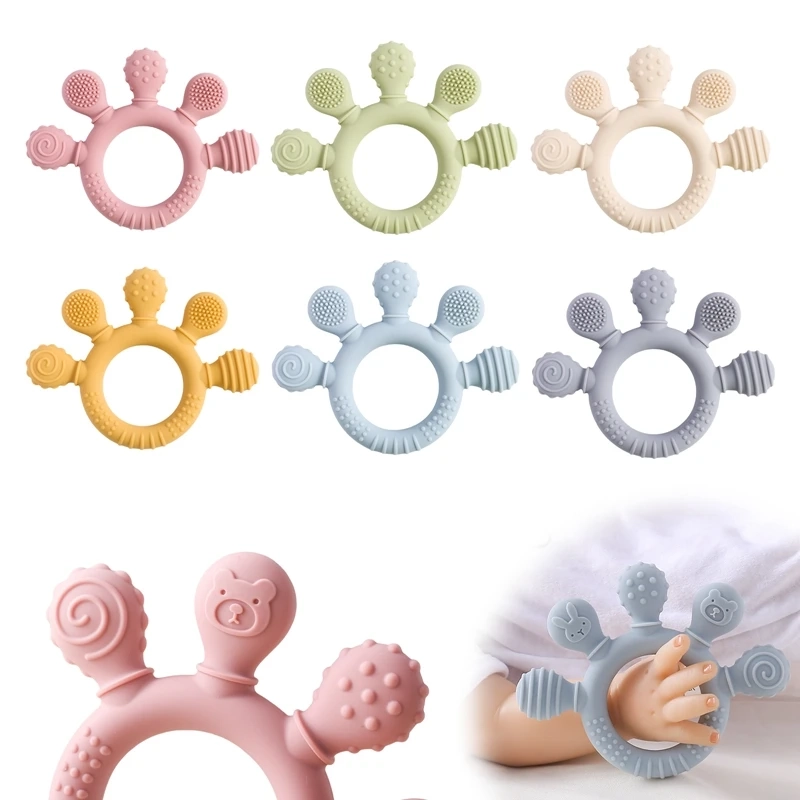
At Milosilicone, we get this question every day from product developers, private-label brands, and parents: can a silicone teether be both safe and effective? This guide breaks down the science, materials, cleaning best practices, certification checkpoints, and practical buying guidance so you — whether you’re a procurement manager looking for reliable suppliers or a parent researching products — can make an informed choice.
Understanding Silicone Safety for Baby Teethers
Food-grade silicone is a synthetic elastomer made from silicon, oxygen, carbon, and hydrogen. High-quality formulations used for baby products are formulated to be inert, free of BPA, phthalates, PVC, and heavy metals. When produced and tested correctly, silicone does not react with saliva or food, and it resists bacterial growth because it’s non-porous.
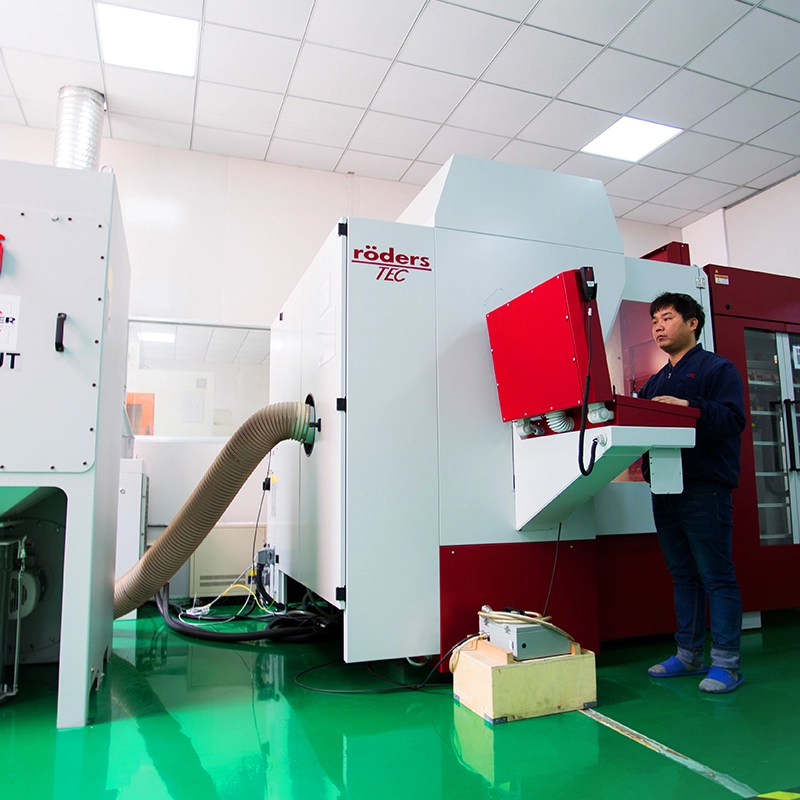
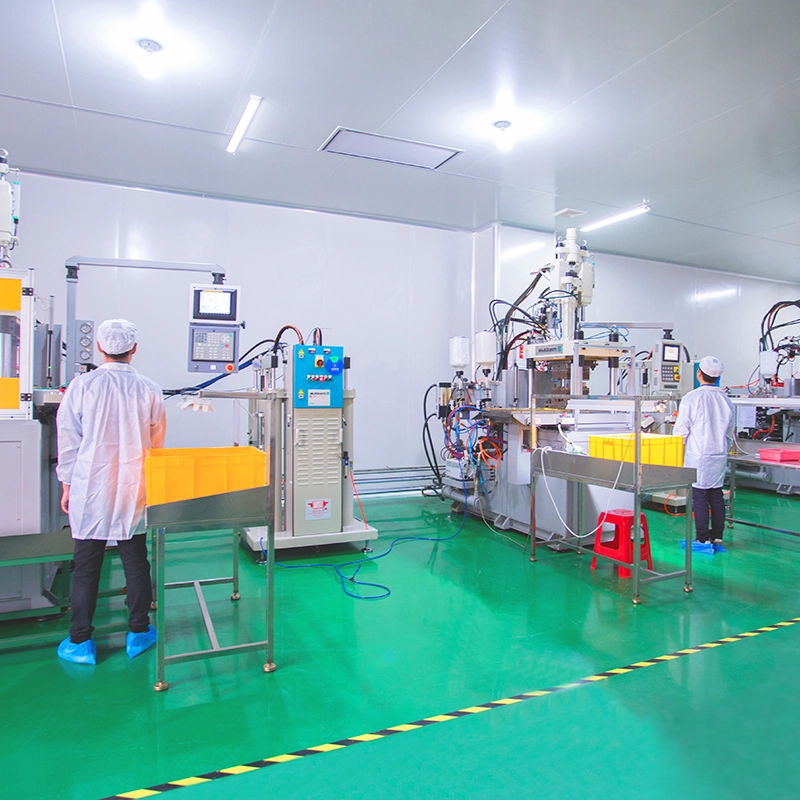
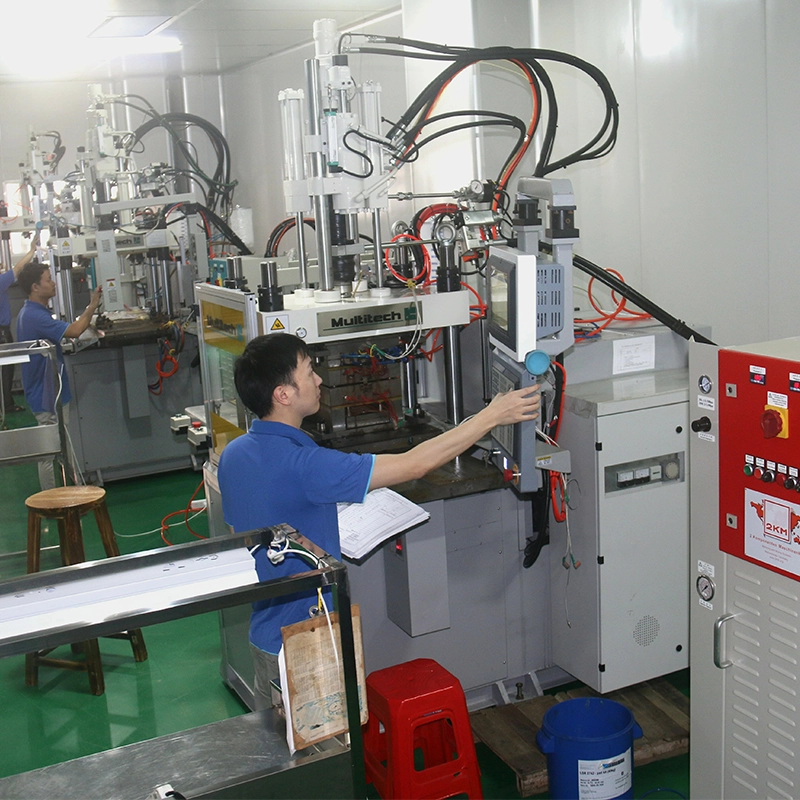
From a manufacturing standpoint, control of raw-material sourcing and process parameters is vital. Reputable factories that offer custom service and OEM lines will provide material certificates (e.g., FDA and/or EU food-contact compliance) and batch traceability to ensure consistent, high quality production.
Why Food-Grade Silicone is Considered Non-Toxic
- Chemically inert: properly vulcanized silicone doesn’t leach dangerous compounds under normal use.
- Heat-stable: most food-grade silicone withstands temperatures well beyond typical sterilization methods.
- Non-porous surface: discourages bacterial colonization compared to wooden or some plastics.
How Silicone Performs Under Heat, Pressure, and Regular Use
Silicone teethers tolerate repeated chewing, bending, and sanitizing cycles without cracking or breaking down when the correct durometer and compound are chosen. During manufacturing, compression set and tensile strength tests are performed to ensure the product retains shape after millions of cycles. Properly made silicone stays soft, does not flake, and keeps printed or laser-etched markings intact.
Silicone vs. Natural Rubber vs. Beechwood: Which Is Safest?
Silicone Teethers: Pros, Cons, and Safety Benefits
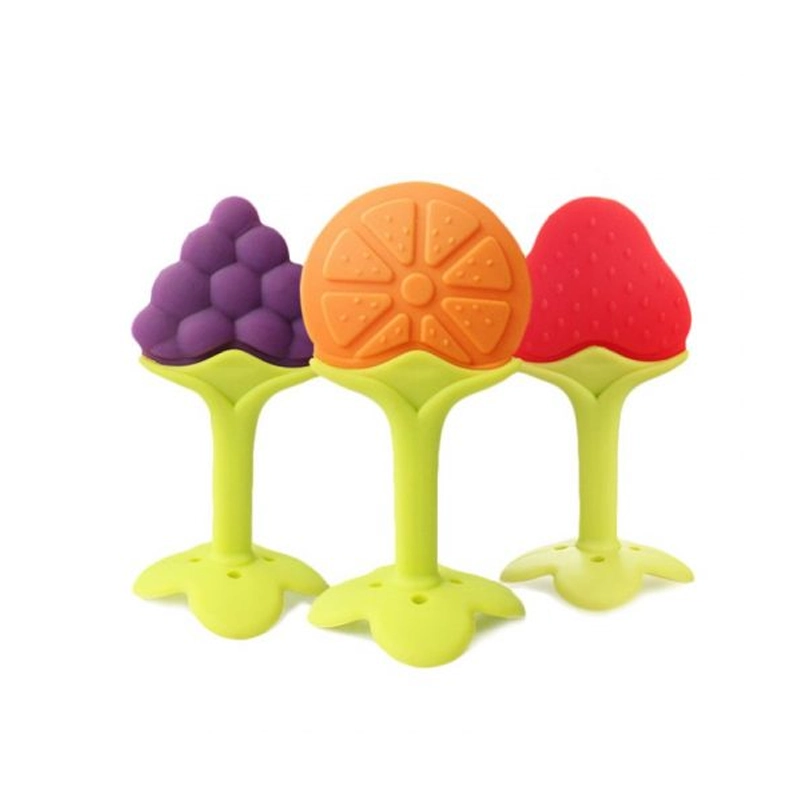
Pros: hypoallergenic, durable, easy to sanitize, customizable for branding and form.
Cons: synthetic by nature; buyers should insist on certifications and verify supplier testing data.
Natural Rubber Teethers: Eco-Friendly but Less Durable
Natural rubber is biodegradable and soft, but some infants can be allergic. Rubber can also degrade faster under UV/light or with repeated sterilization.
Beechwood Teethers: Naturally Antimicrobial, With Special Care Needs
Wood is chemical-free and tactile, but it’s porous and needs careful cleaning and oiling. Not ideal for all-age or high-frequency use without proper maintenance.
Keeping Teethers Hygienic: Cleaning and Sanitizing Essentials
Cleaning frequency depends on use. Daily soap-and-water cleaning is adequate for routine maintenance. For deeper sanitation, many food-grade silicone teethers tolerate:
- Boiling water (short cycles)
- Steam sterilizers designed for baby products
- Top-rack dishwasher cycles — only if manufacturer confirms dishwasher safety
Always follow the supplier’s guidance. Overly aggressive cleaning methods (e.g., prolonged bleach exposure) can degrade finishes or printed elements.
Sanitizing Silicone Safely (Dishwasher, Boiling, or Soap and Water)
Best practice: wash with mild dish soap, rinse thoroughly, then sterilize per product instructions. If using boiling water, immerse for short durations (1–3 minutes) and allow to air-dry. Avoid prolonged boiling unless the supplier certifies the compound for such treatment.
Cleaning Natural Rubber and Wooden Teethers Properly
Wipe wooden teethers with a damp cloth and mild soap; avoid soaking. Apply food-safe mineral oil occasionally to maintain the wood grain. For natural rubber, gentle soap-and-water plus air-drying is recommended; avoid high heat sterilization unless material data supports it.
Safety Certifications Every Parent Should Look For
When sourcing or evaluating products from suppliers or a factory, request:
- FDA food-contact compliance or equivalent (for your market)
- EN 71-3 / ASTM F963 testing for migration of heavy metals (where applicable)
- Phthalate-free & BPA-free declarations
- Microbial resistance testing when applicable
- SGS/Intertek lab reports for batch verification
These documents are essential for B2B purchasing and retail compliance.
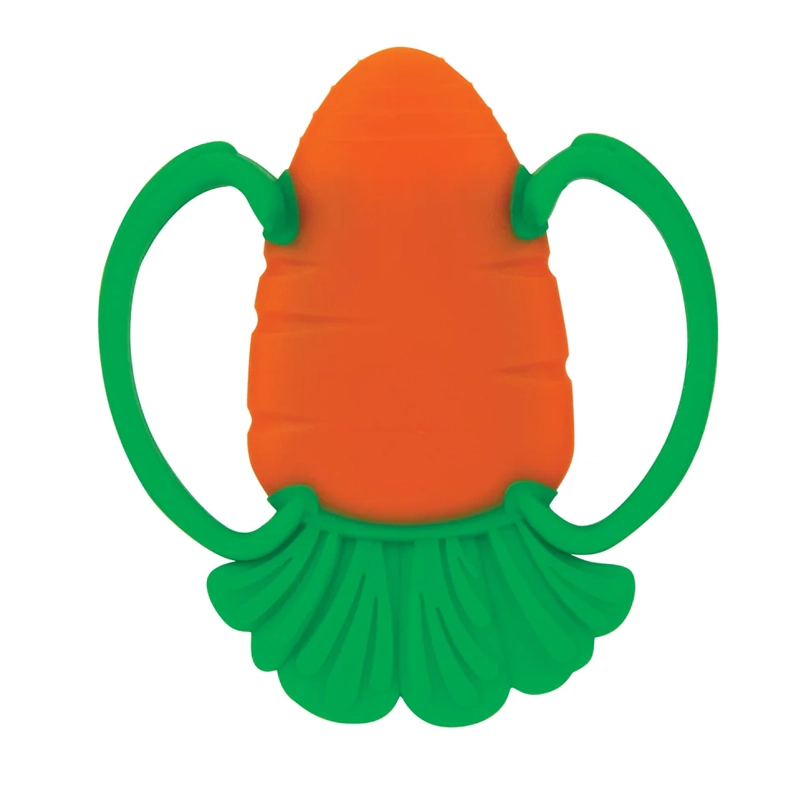
Choosing the Right Teether for Your Baby’s Stage and Age
Design features to match developmental stages:
- Early gum relief: soft, rounded nubs, easy grip
- Teeth eruption: firmer zones combined with softer edges for mixed relief
- Motor skill play: shapes that encourage grasping and manipulation
Manufacturers offering custom silicone baby teether options can tailor durometers, shapes, and branding to match age ranges and regulatory needs.
How Silicone Teethers Support Teething Relief and Early Development
Textured surfaces stimulate gums and help caregivers target sore spots. Good ergonomic design also assists hand-eye coordination and safe mouthing behaviors. For product teams, balancing texture, firmness, and safety is a DFM consideration during tooling and production.
Frequently Asked Questions
What is the safest material for teethers?
Food-grade silicone and untreated hardwood (like beech) are both safe when properly produced and maintained; silicone typically wins for hygiene and durability.
Is silicone okay for babies to chew on?
Yes—when it’s certified food-grade and comes with lab testing from a trustworthy manufacturer.
What do dentists recommend for teething babies?
Dentists often recommend firm-but-gentle chewing surfaces and cooling (but not frozen hard items). Follow professional advice for individual concerns.
What teething toys should you avoid?
Avoid toys with loose parts, untested dyes, or porous materials that can harbor bacteria. Always verify supplier testing.
Conclusion
Food-grade silicone teethers are a safe, practical, and hygienic choice when produced under strict quality systems. If you’re sourcing for retail or private-label, insist on material certifications, batch traceability, and third-party lab reports from your suppliers and manufacturing partners.
If you’re interested in custom service or want samples of our high quality teether designs, tell us your target specs — size, texture, durometer, and order volume — and we’ll share tooling options, lead times, and compliance documentation. Ready to discuss your project? We’d love to work with you — ask for samples or a quotation and we’ll respond quickly.